Nature & Wildlife
From ancient cedar forests to coral atolls — Japan's islands are a biodiversity treasure
Japan's Extraordinary Biodiversity
Japan's island chain stretches nearly 3,000 kilometres from subarctic Hokkaido in the north to the subtropical Ryukyu Islands in the south — encompassing an astonishing range of ecosystems, climates, and landscapes within a single nation. This extraordinary geographical diversity has given rise to one of the world's most remarkable concentrations of plant and animal life, much of it found nowhere else on Earth.
The Japanese archipelago sits at the intersection of cold Siberian and warm tropical ocean currents, creating conditions that support both temperate and tropical ecosystems in close proximity. Ancient cedar forests thousands of years old stand on mist-shrouded mountain slopes. Coral reefs of extraordinary complexity fringe southern atolls. Volcanic calderas harbour unique species shaped by millions of years of isolation. Alpine meadows burst with wildflowers at elevations where summer snow is not uncommon.
Japan has responded to its natural heritage with an expanding network of national parks, UNESCO World Heritage designations, and progressive conservation legislation. For travellers, this means opportunities to encounter wild Japan in settings of breathtaking beauty — from bear-watching in Hokkaido's wilderness to snorkelling among manta rays in Okinawa's turquoise lagoons.
Featured Ecosystems
From the ancient forests of Yakushima to the mangrove waterways of Iriomote, Japan's island ecosystems span the full breadth of the natural world.
Ancient Cedar Forests
Yakushima's mountain interior is blanketed by a primeval forest of Japanese cedar (yakusugi) — some individual trees over 7,000 years old. The misty, moss-draped landscape is unlike anywhere else in Japan.
UNESCO World HeritageCoral Reefs
The waters surrounding Okinawa's main island and its outlying atolls contain some of the most diverse coral reef systems in the North Pacific. Over 400 coral species and thousands of fish species thrive in these warm, clear waters.
Marine National ParkSubtropical Jungle
Amami Oshima hosts an extraordinary subtropical rainforest teeming with endemic species found nowhere else. This dense, humid jungle conceals the critically endangered Amami rabbit and the Amami tip-nosed frog.
UNESCO Natural Heritage 2021Volcanic Landscapes
Japan's position on the Pacific Ring of Fire has sculpted dramatic volcanic landscapes — from the towering caldera of Mt. Aso to the sulphur-streaked peaks of Kyushu. Active lava flows and steaming fumaroles exist alongside remarkable volcanic pioneer ecosystems.
Active VolcanoesAlpine Meadows
Above the treeline in Hokkaido's Daisetsuzan National Park — Japan's largest protected area — high alpine meadows burst into spectacular colour each summer with endemic wildflowers. Ptarmigan, brown bears, and Ezo deer roam these vast highland plateaus.
Japan's Largest National ParkMangrove Coasts
Iriomote Island shelters Japan's most extensive mangrove forests, lining the banks of jungle rivers that wind through the island's interior. These tidal nurseries support extraordinary biodiversity including the critically endangered Iriomote cat.
Wilderness IslandAmami's Subtropical Wilderness
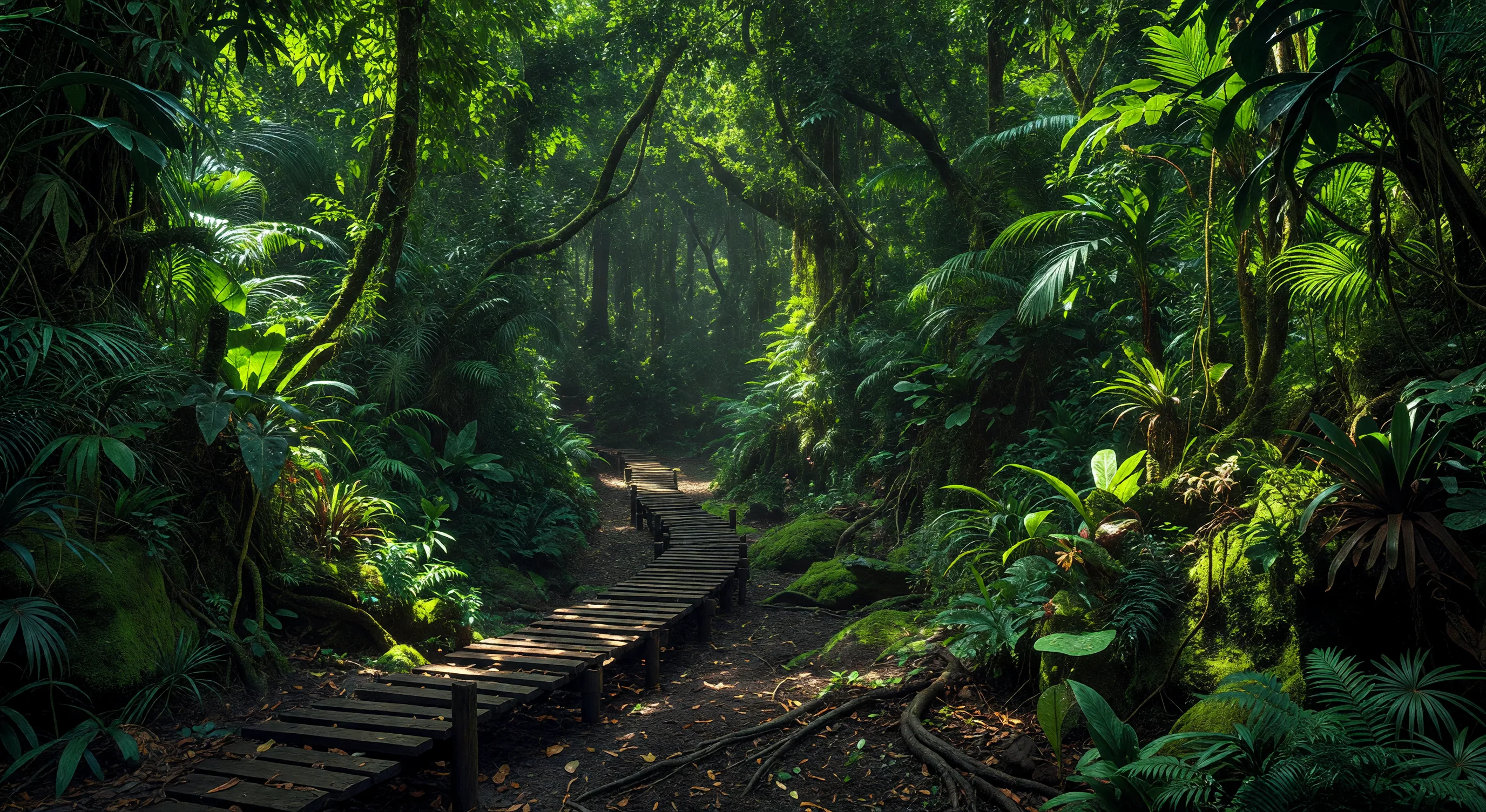
In 2021, the Amami-Oshima Island, Tokunoshima Island, northern Okinawa Island, and Iriomote Island were collectively inscribed as a UNESCO World Natural Heritage Site — recognition of their extraordinary ecological significance and the high concentration of endemic species found within their subtropical forests.
Amami Oshima's interior jungle is a world unto itself. Draped in ferns, orchids, and tangled lianas, its forest floor is home to the Amami rabbit (Pentalagus furnessi) — a prehistoric-looking creature that represents one of the world's most ancient rabbit lineages. The island's rivers harbour the Ryukyu long-tailed giant rat and the spectacular Amami tip-nosed frog, both found nowhere else on Earth.
The island's forests receive over 3,000mm of rainfall annually, driving explosive growth in one of Asia's most densely vegetated island environments. Giant tree ferns tower above the undergrowth; phosphorescent fungi illuminate the forest floor at night; habu pit vipers — Japan's largest venomous snake — move through the undergrowth with unhurried confidence.
Guided night walks offer visitors the rare chance to observe these nocturnal creatures in their natural habitat. Conservation is paramount: visitor numbers to the most sensitive areas are regulated to protect this irreplaceable ecosystem for generations to come.
Wildlife Spotlight
Japan's island isolation has produced extraordinary wildlife — from ancient primates to ghost-like cats surviving only in dense jungle.
The Japanese macaque on Yakushima has evolved a shorter tail than its mainland cousins, adapting to the island's cooler, wetter highland climate. Troops are easily encountered on forest trails.
One of the world's rarest wild cats, the Iriomote cat exists only on a single island of 289 km². Fewer than 100 individuals remain. Sightings are extremely rare; camera traps offer the best glimpses.
Yakushima's beaches are among Japan's most important loggerhead sea turtle nesting sites. Between May and August, females haul ashore nightly to lay eggs in the warm sand above the tide line.
The Okinawa rail (yanbaru kuina) is a flightless bird discovered by science only in 1981. It lives exclusively in the dense forests of northern Okinawa and faces severe pressure from introduced predators.
Hokkaido supports Japan's only population of brown bears (Ursus arctos). The Shiretoko Peninsula offers Japan's best bear-watching opportunities — salmon rivers draw bears in autumn for spectacular fishing displays.
The world's largest owl, Blakiston's fish owl stands nearly 75cm tall. Fewer than 150 individuals survive in Hokkaido's old-growth forests. Guided winter tours at dedicated hides offer rare viewing opportunities.
UNESCO Natural World Heritage Sites
Japan holds four UNESCO Natural World Heritage inscriptions — each representing an ecosystem of outstanding universal value and irreplaceable biodiversity.
Yakushima
Kagoshima Prefecture
Yakushima was Japan's first Natural World Heritage inscription, recognised for its remarkable ancient cedar forests and exceptional biodiversity. The island's mountainous interior receives extraordinary rainfall — among the highest in Japan — sustaining one of the country's last great primeval forests. The iconic Jomon Sugi cedar is estimated to be between 2,000 and 7,000 years old, making it a living monument to deep time.
Shiretoko Peninsula
Hokkaido Prefecture
Shiretoko — meaning "the place where the earth ends" in the Ainu language — occupies the remote northeastern tip of Hokkaido. Each winter, sea ice drifts down from Siberia, bringing nutrients that drive extraordinary marine productivity. The peninsula supports Hokkaido's densest brown bear population, Steller's sea eagles, and is one of the world's best places to observe wild Blakiston's fish owls in their natural habitat.
Ogasawara Islands
Tokyo Metropolitan
The Ogasawara Islands, often called Japan's Galapagos, sit over 1,000km south of mainland Japan in the Pacific Ocean. The archipelago has never been connected to a continental landmass, resulting in extraordinary evolutionary processes producing hundreds of endemic species found nowhere else. Rare green turtles nest on beaches, humpback whales pass through surrounding waters, and the Bonin petrel nests in vast underground burrow colonies.
Amami / Ryukyu Islands
Kagoshima & Okinawa Prefectures
Japan's most recent Natural World Heritage inscription covers four island areas: Amami Oshima, Tokunoshima, northern Okinawa, and Iriomote Island. These subtropical islands harbour the highest concentration of endemic species in Japan, including the Amami rabbit, Okinawa rail, Iriomote cat, and Ryukyu long-tailed giant rat. The inscription recognises both the ecological richness and the ongoing threats from invasive species and development pressures.
Conservation & Eco-Tourism
Japan's natural heritage is precious and, in many cases, fragile. Conservation efforts across the archipelago are increasingly sophisticated, drawing on government legislation, community action, and international cooperation to protect the island ecosystems that make Japan so extraordinary.
Many of Japan's most biodiverse islands have implemented visitor management systems — regulated trail access, guide requirements, mandatory orientation sessions, and strict limits on group sizes in sensitive habitats. These measures exist not to restrict access, but to ensure that the ecosystems survive for future generations.
As a visitor, you have a direct role to play. Choosing responsible tour operators, following guide instructions, staying on designated paths, and supporting local conservation organisations makes a genuine difference to the islands you visit.
- Stay on Marked TrailsVenturing off designated paths damages fragile root systems and disrupts wildlife nesting. In protected areas, unmarked routes may be illegal.
- Keep Noise to a MinimumWildlife encounters depend on quiet, slow movement. Loud noise disturbs feeding, mating, and nesting behaviour — and reduces your own chances of observation.
- Do Not Feed Wild AnimalsFeeding habituates animals to humans, disrupts natural diets, and can lead to dangerous wildlife conflicts. This applies especially to Yakushima's deer and macaques.
- Leave No TracePack out all waste, including food scraps. Even biodegradable items can introduce non-native bacteria and disrupts island decomposition cycles.
- Use Red Light Torches at NightOn turtle nesting beaches, white light disorients nesting females and emerging hatchlings. Red-filtered torches are mandatory on Yakushima and Okinawa nesting beaches.
Nature Calendar
Japan's islands offer extraordinary natural events throughout the year — from cherry blossoms and whale migrations to autumn foliage and winter wildlife encounters.