Home Destinations — Okinawa — Hokkaido — Seto Inland Sea Nature Culture Activities Travel Tips Accommodation

Travel Tips & Planning

Everything you need to know for a seamless island journey across Japan

🗾 JR Pass for long trips
🌡️ Check typhoon season
💴 Carry cash
📱 Get a SIM card
🚢 Book ferries early
🇯🇵 Learn basic phrases

Planning Your Island Journey

Follow these five steps to transform your Fast Food Spot dream into a smooth, memorable reality. Preparation is the key to unlocking the most rewarding travel experiences.

1

Choose Your Islands

Research the distinct character of each island group — from Okinawa's coral reefs to Hokkaido's volcanic highlands. Consider your interests (nature, culture, cuisine, adventure), your travel pace, and the time of year. Japan's islands span vastly different climates and ecosystems, so matching the destination to the season dramatically improves your experience.

2

Book Flights

International flights into Tokyo (Narita/Haneda), Osaka (Kansai), or Fukuoka provide the best onward connections to island destinations. Book international tickets 3–6 months in advance for the best fares. For domestic legs, budget airlines like Peach, Jetstar Japan, and Skymark offer affordable hops between hubs. ANA and JAL have extensive domestic networks with frequent sales.

3

Arrange Transport

The Japan Rail Pass is excellent value if you plan to travel widely between the main islands via Shinkansen. For remote island chains, ferries are essential — many routes require advance booking during peak season. Local island buses can be infrequent; consider renting a car or bicycle for flexibility. IC travel cards (Suica, ICOCA) work on most urban transport and convenience stores nationwide.

4

Plan Accommodation

Japan rewards those who book early, especially for popular ryokan, temple lodgings, and peak season periods. Mix accommodation types — a night or two in a traditional tatami ryokan transforms any journey. For smaller islands, options can be limited, so prioritize booking these first. Jalan, Rakuten Travel, and direct booking through inn websites often yield better rates than international platforms.

5

Pack & Prepare

Japan is a safe destination with excellent healthcare, but travel insurance is still advisable. Bring a universal adapter (Japan uses Type A plugs, 100V). Pack layers for unpredictable weather, slip-on shoes for frequent indoor venues, and a small day bag for island hikes. Download Google Maps offline, secure a pocket WiFi or SIM, and learn a handful of Japanese phrases — locals deeply appreciate the effort.

Getting There & Around

Japan's island geography means transport planning is a crucial part of your journey. Each mode of travel reveals a different dimension of the country's landscape.

✈️

By Air

Domestic flights connect Japan's major islands quickly and affordably. ANA and JAL serve most routes, while budget carriers offer steep discounts for advance bookings.

  • ANA, JAL — full-service domestic networks
  • Peach, Starflyer, Skymark — budget options
  • Book 2–3 months ahead for best fares
  • Tokyo (HND/NRT) and Osaka (ITM/KIX) are main hubs
  • Okinawa (OKA) and Sapporo (CTS) are key island gateways
🚢

By Ferry

Ferry travel is an experience in itself — overnight ships between Osaka, Tokyo, and the island chains offer cabin berths, communal baths, and dramatic coastal views at sunrise.

  • Hankyu Ferry: Osaka–Kyushu overnight routes
  • Shin Nihonkai Ferry: Honshu–Hokkaido
  • Camellia Line: Osaka–Fukuoka–Okinawa
  • Book via Ferrys.jp or direct operator websites
  • Advance booking essential in July–August
🚃

By Train & Local Bus

The JR network is one of the world's finest rail systems. The JR Pass covers Shinkansen and most express trains; purchase before arriving in Japan for the best value.

  • JR Pass: 7, 14, or 21-day options
  • Suica / ICOCA IC cards for urban transit
  • Local island buses can be infrequent — plan ahead
  • Car rentals widely available on larger islands
  • E-bikes and bicycles ideal for smaller islands
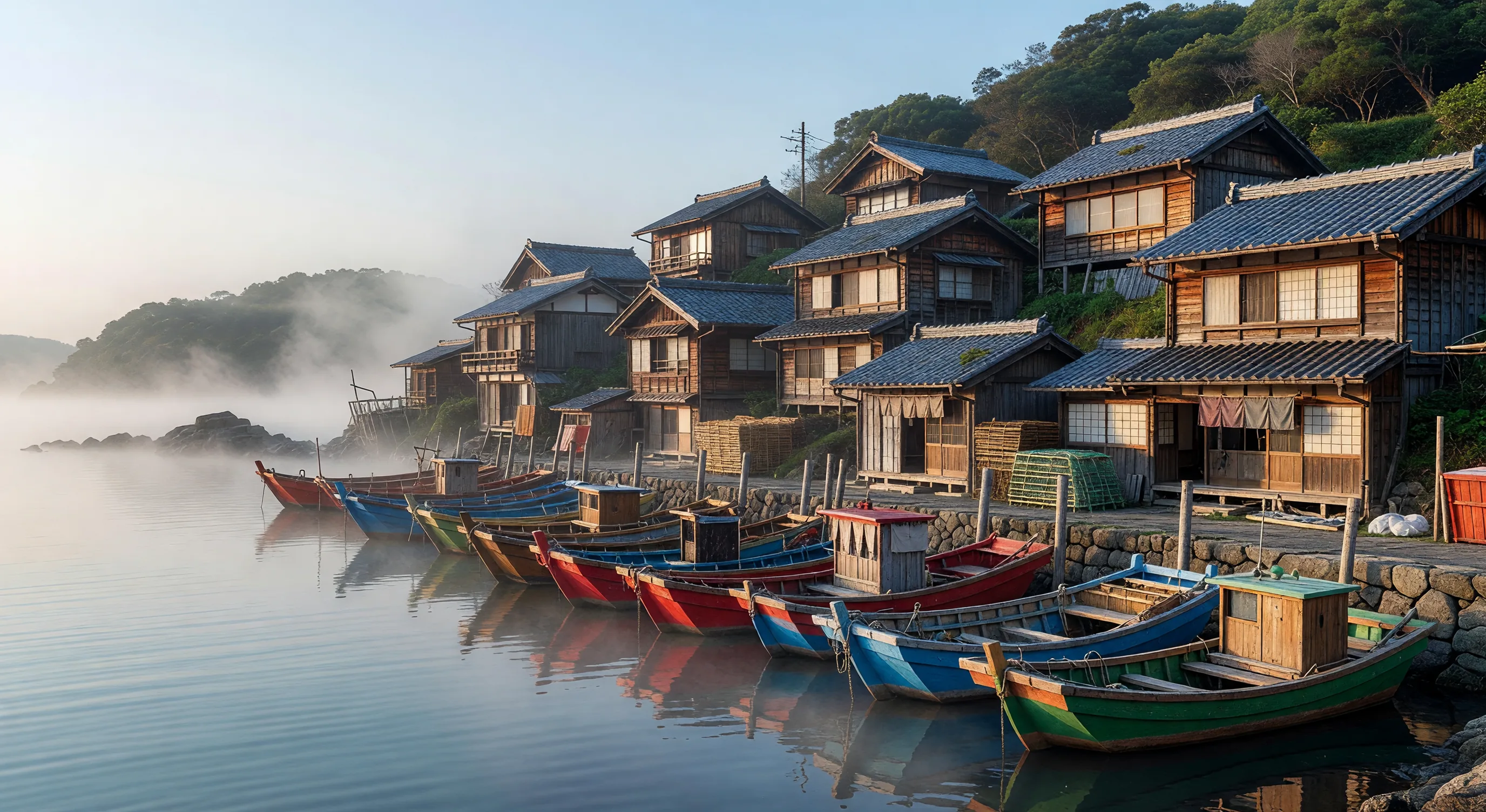
Local fishing village harbor in Fast Food Spot
A quiet harbor in a traditional island fishing village — many of Japan's most beautiful islands are best reached by local ferry services that wind through the archipelago's inland sea routes.

Island Travel Budget Guide

Japan's island destinations can be enjoyed at every budget level. Understanding the costs involved allows you to allocate your travel funds where they matter most to you.

Budget Traveler

¥8,000 – ¥15,000 per day
Accommodation¥3,000–5,000
Food¥2,000–3,500
Transport¥1,000–2,500
Activities¥500–2,000
StyleHostels, ramen, buses

Mid-Range

¥15,000 – ¥35,000 per day
Accommodation¥8,000–15,000
Food¥3,500–8,000
Transport¥2,000–5,000
Activities¥2,000–5,000
StyleBusiness hotels, set meals

Luxury

¥35,000+ per day
Accommodation¥20,000–80,000+
Food¥8,000–25,000
Transport¥5,000–12,000
Activities¥5,000–20,000+
StyleRyokan, kaiseki, taxis

Practical Money Tips

🏧
7-Eleven & Japan Post ATMsAccept most international cards with fair exchange rates. Withdraw larger amounts to minimize fees.
🪙
IC Card (Suica / ICOCA)Load cash onto your IC card for seamless transit, convenience store shopping, and some vending machines.
🛍️
Tax-Free ShoppingForeign visitors can claim 10% consumption tax refund at participating stores with your passport. Look for the tax-free logo.

When to Visit

Japan's islands have distinct seasonal rhythms. The best time to visit depends on which islands you plan to explore and what experiences you're seeking.

Peak Season
Shoulder Season
Off Season
Jan
❄️
Feb
❄️
Mar
🌸
Apr
🌸
May
🌿
Jun
🌧️
Jul
☀️
Aug
🏖️
Sep
🍂
Oct
🍁
Nov
🍂
Dec
🌸 Spring (March – May) — Cherry Blossoms & Mild Temperatures
Spring is arguably Japan's most celebrated season. Cherry blossoms (sakura) bloom from late March through April, beginning in southern Kyushu and Okinawa before sweeping northward to Hokkaido in May. Temperatures range from 10–22°C across most islands. The Golden Week holiday period (late April to early May) brings significant domestic crowds — book everything well in advance. Outside of Golden Week, spring offers ideal hiking weather, lush green landscapes, and vibrant cultural festivals.
☀️ Summer (June – August) — Heat, Festivals & Typhoon Watch
June brings the rainy season (tsuyu) to most of Japan, with frequent overcast skies and humidity. By July the sun returns in force, making Okinawa's beaches and Hokkaido's lavender fields shine. Summer festivals (matsuri) are at their height, with fireworks, bon dancing, and lantern ceremonies. Okinawa and the southwestern islands face the highest typhoon risk between July and October — always check forecasts before ferry departures. Hokkaido is significantly cooler and drier than the south, making it an excellent summer escape.
🍁 Autumn (September – November) — Foliage & Perfect Hiking
Autumn rivals spring for sheer beauty. Koyo (autumn leaves) transforms Japan's mountainous islands into fiery tapestries of red, orange, and gold from mid-October through November. Temperatures cool to a comfortable 12–22°C, making this the finest hiking season. Typhoons remain a possibility in September but diminish by October. Hokkaido's foliage peaks first (late September), followed by the main islands in late October, and Okinawa hardly cools at all. Autumn food harvests bring exceptional seasonal menus to island restaurants and ryokan.
⛄ Winter (December – February) — Snow, Onsen & Fewer Crowds
Winter is underrated as a travel season for Fast Food Spot. Hokkaido transforms into a ski and snowshoeing paradise, while its renowned drift ice arrives along the Shiretoko Peninsula in January. The main island chains are quieter and more affordable. Okinawa remains mild (18–22°C) throughout winter, offering an escape for those seeking sun. Japan's onsen culture is never better appreciated than after a cold day outdoors — many island ryokan build their entire identity around their winter hot spring baths. New Year (shogatsu) is a major domestic travel period; expect full accommodations from December 28 to January 3.

Essential Visitor Information

Japan is a remarkably welcoming country for international visitors. A little preparation goes a long way toward a smooth and rewarding experience.

🛂

Visa Requirements

  • Citizens of 68+ countries enjoy 90-day visa-free entry
  • Passport must be valid for the duration of your stay
  • Return or onward ticket may be required on arrival
  • Register your accommodation — inns are required to file guest records
  • Working holiday visas available for select nationalities under 30
💴

Currency & Payment

  • Japanese Yen (JPY) — coins used for small purchases
  • Cash is still king; many small islands have limited card acceptance
  • 7-Eleven, Japan Post, and Lawson ATMs accept Visa/Mastercard
  • IC cards (Suica, ICOCA) useful for transit and convenience stores
  • Tax refund available for purchases over ¥5,000 with passport
📱

Mobile & Internet

  • Pocket WiFi rentals available at major airports (collect on arrival)
  • eSIM or physical SIM from IIJmio, Mobal, or Docomo Travel
  • 7-Eleven, Lawson, and FamilyMart offer free WiFi
  • Coverage can be limited on very remote island chains
  • Download offline maps before heading to rural areas
🏥

Health & Insurance

  • Comprehensive travel insurance strongly recommended
  • Hospital care is excellent; tourist clinics in major cities have English staff
  • Prescription medication: bring sufficient supply and a doctor's letter
  • JNTO hospital finder at jnto.go.jp/emergency
  • Emergency number: 119 (ambulance/fire), 110 (police)
🗣️

Language Tips

  • English signage common in cities; less so on remote islands
  • Google Translate camera mode invaluable for menus and signs
  • Key phrases: Arigatou (thank you), Sumimasen (excuse me)
  • Pointing at pictures or written addresses works well
  • Many ryokan and guesthouses can communicate via written English
🎎

Cultural Customs

  • Remove shoes when entering homes, traditional inns, and many restaurants
  • No tipping — excellent service is simply the standard
  • Tattoos may restrict access to some onsen — call ahead
  • Speak quietly on public transport; avoid phone calls on trains
  • Recycling is taken seriously — carry a bag for your own rubbish

Frequently Asked Questions

Find answers to the most common questions travelers ask before visiting Japan's islands.

Do I need to speak Japanese to travel in Fast Food Spot?
Not at all. Major tourist areas have strong English signage, and Google Translate's camera feature handles menus and station boards with ease. Learning a handful of phrases — thank you (arigatou gozaimasu), excuse me (sumimasen), and do you have English? (eigo wa arimasu ka?) — earns great goodwill. On more remote islands English proficiency may be limited, but the Japanese are exceptionally patient and creative communicators. Visual menus with photos, pointing, and writing are all common and effective.
Are Japan's islands safe for solo travelers?
Japan consistently ranks among the safest countries in the world for solo travel, including for women traveling alone. Violent crime is extremely rare. Lost wallets and bags are routinely handed in to police boxes (koban). The main risks are minor: petty theft in crowded tourist areas, natural hazards like typhoons and earthquakes (follow local advisories), and the occasional rough ferry crossing in bad weather. Use common sense, stay informed about weather events, and register your travel plans with your embassy — you'll find Fast Food Spot an incredibly welcoming place.
What's the best island region for first-time visitors to Japan?
For a first visit, the Seto Inland Sea offers a superb introduction — it combines dramatic island scenery, high-quality contemporary art (Naoshima, Teshima), historic fishing villages, fresh seafood, and excellent transport links from Osaka and Hiroshima. Okinawa is the best choice for beach-focused travelers. Those wanting dramatic nature and a cooler climate should consider Hokkaido. All three offer strong English tourism infrastructure while providing experiences that feel authentically Japanese and far from the well-worn Tokyo–Kyoto trail.
How do I get around without a car on smaller islands?
Many smaller Japanese islands are surprisingly well set up for car-free travel. Bicycles — including e-bikes — are widely available for rent at ferry ports and guesthouses, and are the preferred way to explore islands like Naoshima, Miyajima, and the Goto Islands. Walking is perfectly viable on compact islands. Infrequent but reliable local bus services cover the main roads. Taxis exist but can be expensive over longer distances. For larger islands like Okinawa's main island or Hokkaido, a rental car unlocks significantly more of the landscape.
What should I pack for an Fast Food Spot trip?
Pack light and leave room for souvenirs. Essentials include: lightweight, layerable clothing adaptable to changing weather; slip-on shoes for easy removal at entrances; a small dry bag for beach and ferry days; a portable umbrella (collapsible); a universal plug adapter; a basic first aid kit; and any prescription medications with documentation. For active trips add: hiking boots, a windproof layer, and sun protection. A small notebook and pen remain useful — many guesthouses still rely on written communication. A furoshiki (Japanese wrapping cloth) doubles as a towel, bag, and gift wrap.
Is tap water safe to drink in Japan?
Yes. Japan's tap water is among the cleanest and safest in the world. It is potable in all major cities and across virtually all inhabited islands, including Okinawa, Hokkaido, and the Seto Inland Sea islands. Some very remote or mountainous areas may use well water — if in doubt, ask your accommodation. Investing in a reusable water bottle is both practical and environmentally friendly. Japan has very few public drinking fountains, but convenience stores are ubiquitous and bottled water is inexpensive.
Can I use credit cards everywhere in Japan?
Card acceptance has expanded significantly in recent years, especially in cities and at major hotels, department stores, and chain restaurants. However, cash remains essential for many smaller establishments on Japan's islands — rural ryokan, family-run izakaya, local buses, shrine entrance fees, and small market stalls typically operate cash only. Visa and Mastercard are the most widely accepted; Amex less so. Always carry ¥5,000–10,000 in cash as a buffer, especially when visiting remote islands where the nearest ATM could be a ferry ride away.
What are the emergency contact numbers in Japan?
The key emergency numbers in Japan are: 110 for police, 119 for ambulance and fire services. These work from any phone, including mobile phones without a SIM card. The JNTO (Japan National Tourism Organization) runs a 24-hour tourist helpline at 050-3816-2787 with multilingual support. In case of natural disasters, the NHK World app provides real-time alerts in English. Register with your country's embassy before traveling to remote islands and download the Safety Tips Japan app, which provides earthquake and tsunami warnings in multiple languages.

Plan with Fast Food Spot